Best Practices in Energy Management for Fuel Terminals
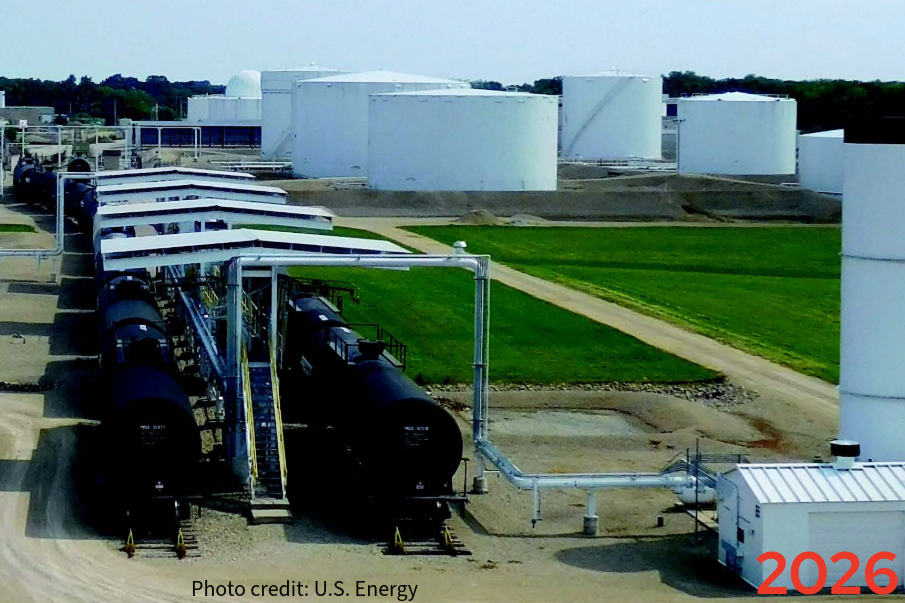
Client: U.S. Venture/U.S. Energy
Team: Gursel Abbas, Archish Narayan, and Reena Maali
Mentor: Bu Wang
U.S. Venture/U.S. Energy operate a network of fuel terminals around the country, including two in the Madison area. The company partnered with EAP students Gursel Abbas, Archish Narayan, and Reena Maali to identify areas where the Madison terminals could save on utility costs, improve energy efficiency and reliability, and reduce emissions, which could inform improvements at other fuel terminals.
Analysis of the Madison fuel terminals reveals that short-duration, intermittent pump operations drive peak demand charges that account for a substantial portion of the terminals’ annual electricity bill. By suppressing peak demand to switch to a lower utility tariff tier, one terminal can achieve a 20% reduction in annual energy spending. To realize these financial and environmental benefits, the report recommends deploying a Battery Energy Storage System (BESS) for peak shaving, improving pump efficiency through optimally-controlled Variable Frequency Drives (VFDs) to reduce overall energy consumption, and electrifying office heating systems with cold-climate heat pumps to reduce natural gas consumption.