Nuclear Fusion in the U.S.: Supply Chain Bottleness and Enabling Policies
Client: Princeton Plasma Physics Laboratory
Team: Jacklyn Alsbro, Dean Krueger, Katrina Santos, and Roland Will
Mentor: Ben Lindley
As private investment in fusion energy has ramped up in recent years, the Princeton Plasma Physics Laboratory partnered with EAP students Jacklyn Alsbro, Dean Krueger, Katrina Santos, and Roland Will to assess the readiness of the global supply chain and U.S. regulatory environment to support the commercial acceleration of magnetic confinement fusion systems.
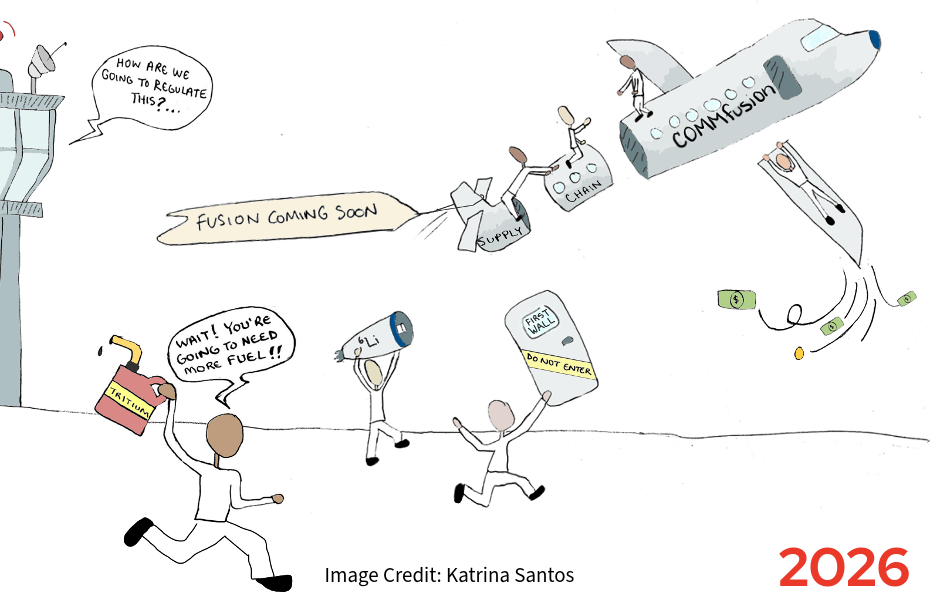
The analysis identifies critical near-term constraints across physical components, noting domestic processing bottlenecks for vital fuel-cycle materials like lithium-6, tritium, and beryllium, severe international dependencies for computer chips and high-power switches, and technological gaps in high-temperature superconductors and other materials. Furthermore, the study explores financial risks stemming from capital-intensive timelines and the regulatory friction caused by unfinalized rules from the Nuclear Regulatory Commission and international trade controls. To establish U.S. leadership in fusion energy, the report prescribes a comprehensive policy package, including near-term tariff exemptions for critical foreign components, federal de-risking of domestic tritium and lithium-6 production, formalized pre-application pathways at the Nuclear Regulatory Commission, and the expansion of milestone-based funding programs, state-level policies to attract investment, and public-private partnerships.